The Day the Wheelchairs Stood Empty
Chapter 1: The First Kick
The twin boys were supposed to be paralyzed.
Every doctor had said the same thing. Permanent nerve damage. No recovery. No hope. Daniel Whitmore had heard those words from surgeons, neurologists, private consultants, and specialists flown in from Europe. Eventually, the words stopped sounding like diagnosis and became furniture in the house.
Wheelchairs by the window.
Therapy schedules on the wall.
A nursery turned into a medical room.
Silence where running should have been.
So when Daniel walked into the grand, sunlit living room that afternoon, he was not ready for the sound of laughter.
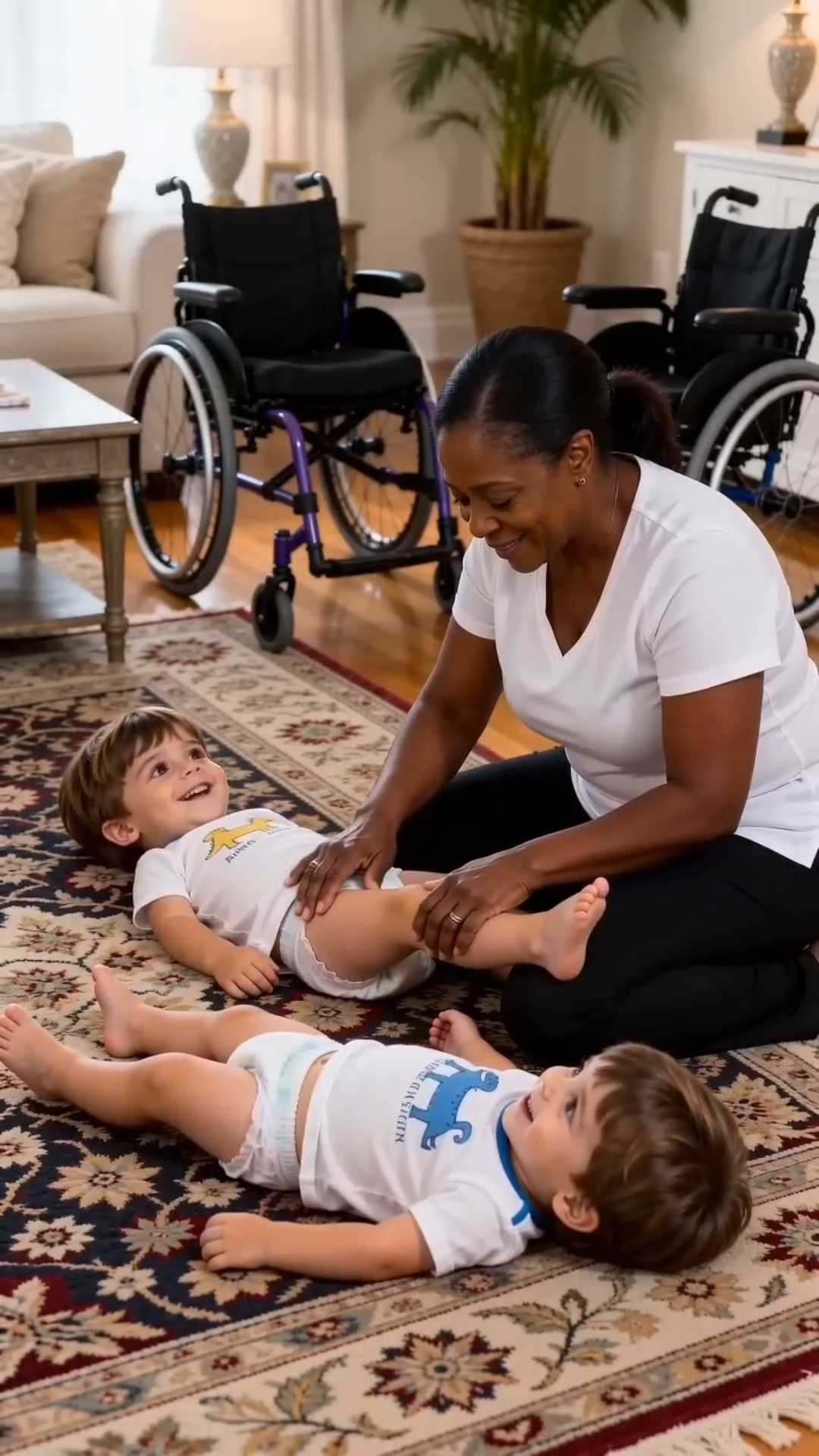
His sons, Noah and Liam, were on the carpet.
Not in their chairs.
Not lying still.
Moving.
Noah was on his back, laughing as Grace, the housekeeper, gently massaged his legs. Liam lay beside him, lifting one foot toward her hands with an impatient little grin.
"It's my turn!" Liam said.
Daniel stopped so suddenly that the folder in his hand slipped to the floor.
Grace did not look surprised. She sat calmly on the carpet in her plain gray dress, her dark hair tied back, her hands steady as she pressed carefully along Noah's calf.
"Easy," she said softly. "Feel it. Don't rush."
Noah giggled and kicked.
Not much.
But enough.
Daniel's vision blurred.
He turned his head toward the window.
The two wheelchairs stood there.
Empty.
Unused.
For the first time.
He took one step forward. Then another. By the time he reached the boys, his knees had already weakened. He dropped onto the carpet beside them, reaching for their legs, their feet, touching them as if they might disappear.
"You can move," he whispered. "You can actually move."
The boys laughed because they did not understand the full weight of his tears. They only understood that their father was happy, and happiness had been rare in that house since the accident.
Grace finally looked up.
Her face was calm.
Too calm.
Daniel turned toward her, still crying. "How?"
She lowered her eyes. "Slow work, sir."
"Slow work?" His voice shook. "Grace, the best doctors in the world said this was impossible."
"They said the nerves were dead," she replied quietly. "I did not believe they were dead."
Daniel stared at her.
For eighteen months, Grace had been almost invisible in the house. She arrived early, stayed late, prepared meals, read stories to the boys, helped with baths, folded blankets, and moved through grief with the quiet steadiness of a woman who knew how to survive inside other people's sorrow.
He had trusted her.
But he had never truly looked at her.
Now he saw the calluses on her hands. The careful way she watched the boys' muscles. The strange sadness in her eyes when she glanced at the wheelchairs.
"What did you do?" he asked.
Grace did not answer immediately.
Before she could speak, a sharp voice cut through the doorway.
"What is going on here?"
Daniel turned.
His mother, Eleanor Whitmore, stood at the entrance of the living room, her silver hair pinned perfectly, her face pale with anger rather than joy.
Her eyes were not on the twins.
They were on Grace.
And when Grace slowly rose from the carpet, Daniel saw something pass between the two women.
Recognition.
Fear.
And a secret that had clearly existed long before this afternoon.