She Blamed the Maid—But His Daughter Had the Recording
Chapter 4 — The Second Recording
The second recording mattered more than anyone had guessed.
Lily had set the camera on a broad windowsill to tie the ribbon at her waist. From there, its lens caught the upper landing, including a reflection in the glass cabinet opposite the staircase.
The investigators examined the original file and the camera's storage. They also collected statements and checked the house security system. Morgan did not pretend one distorted sentence could answer every question.
But the moving picture was harder to explain away.
It showed Adrian turning from Vivienne toward the stairs. It showed her following, reaching, and shoving him. Daniel stood within view of the cabinet's reflection. He did not reach for his brother. He turned toward the corridor where the staff worked.
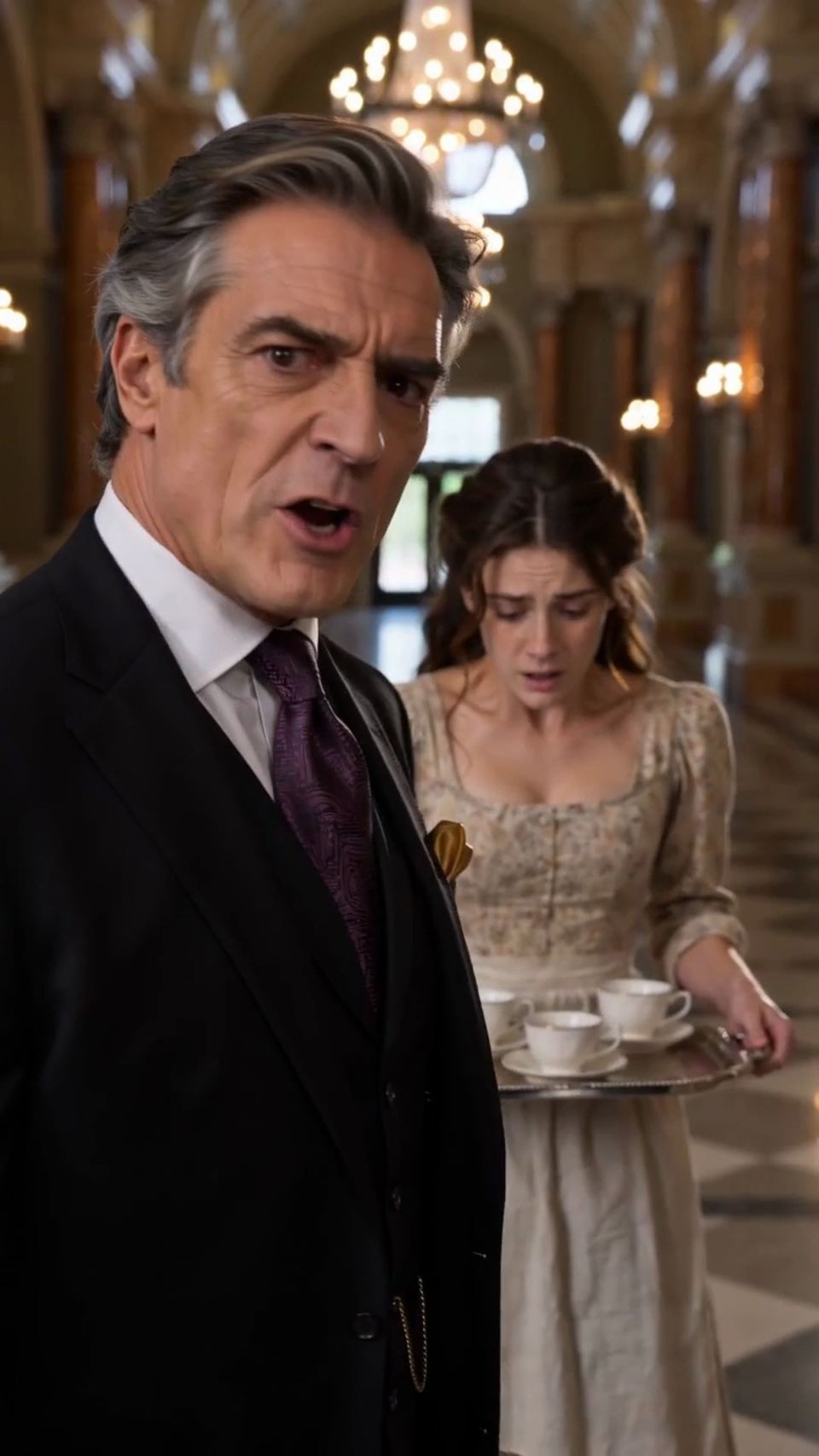
The recording continued. Clara appeared after the commotion, hurrying toward Adrian. The sequence contradicted Vivienne's claim that the maid had attacked him.
The audio from the earlier clip was assessed alongside the other evidence. The accusation had begun as an unidentified voice in a crowded room; now the investigators had a timeline, witnesses, and documents to test against it.
Morgan returned Clara's statement for her to read carefully. Clara corrected one small detail: she had been carrying folded napkins, not towels.
“Does that matter?” she asked.
“It matters that it's your account.”
For the first time, Clara felt no pressure to sound polished. She only had to be accurate.
Vivienne's next explanation was that she had reached to steady Adrian. When confronted with the recording, she asked for a lawyer. Daniel stopped describing the missing money as a bookkeeping mistake.
Their answers would be tested through the investigation. Adrian did not ask Clara to follow every development, and she was grateful. She had a child to reassure and her own life to recover.
Three days later, Vivienne sent a message through her lawyer asking Adrian not to destroy their future over “one terrible moment.”
He read it once.
Clara was standing by the door with Lily's drawings. “Do you need me to come back?”
“No.” He put the phone facedown. “There isn't a future to protect.”
He asked his lawyer to end the engagement and preserve every relevant record.
Then he called Mrs. Shaw and dictated a statement for the household and the guests who had witnessed Clara's humiliation. It said plainly that the allegation against Clara was false and that she had helped him while he was injured.
He did not call it a misunderstanding.
Before it was sent, he asked Clara to read it.
“Is there anything you want changed?”
She read the final line twice: She deserved to be believed, and she deserved to be treated with respect before anyone saw a recording.
“Leave that,” she said.