My Sister Returned With Proof Against My Husband
Part 1 - The Woman at the Counter
“Before you tell me to leave, ask your husband what he did with my bus ticket.”
My sister said that after eighteen years without a birthday card, a phone call, or a place at my table.
I was trimming roses in my flower shop. The scissors stopped halfway through a stem.
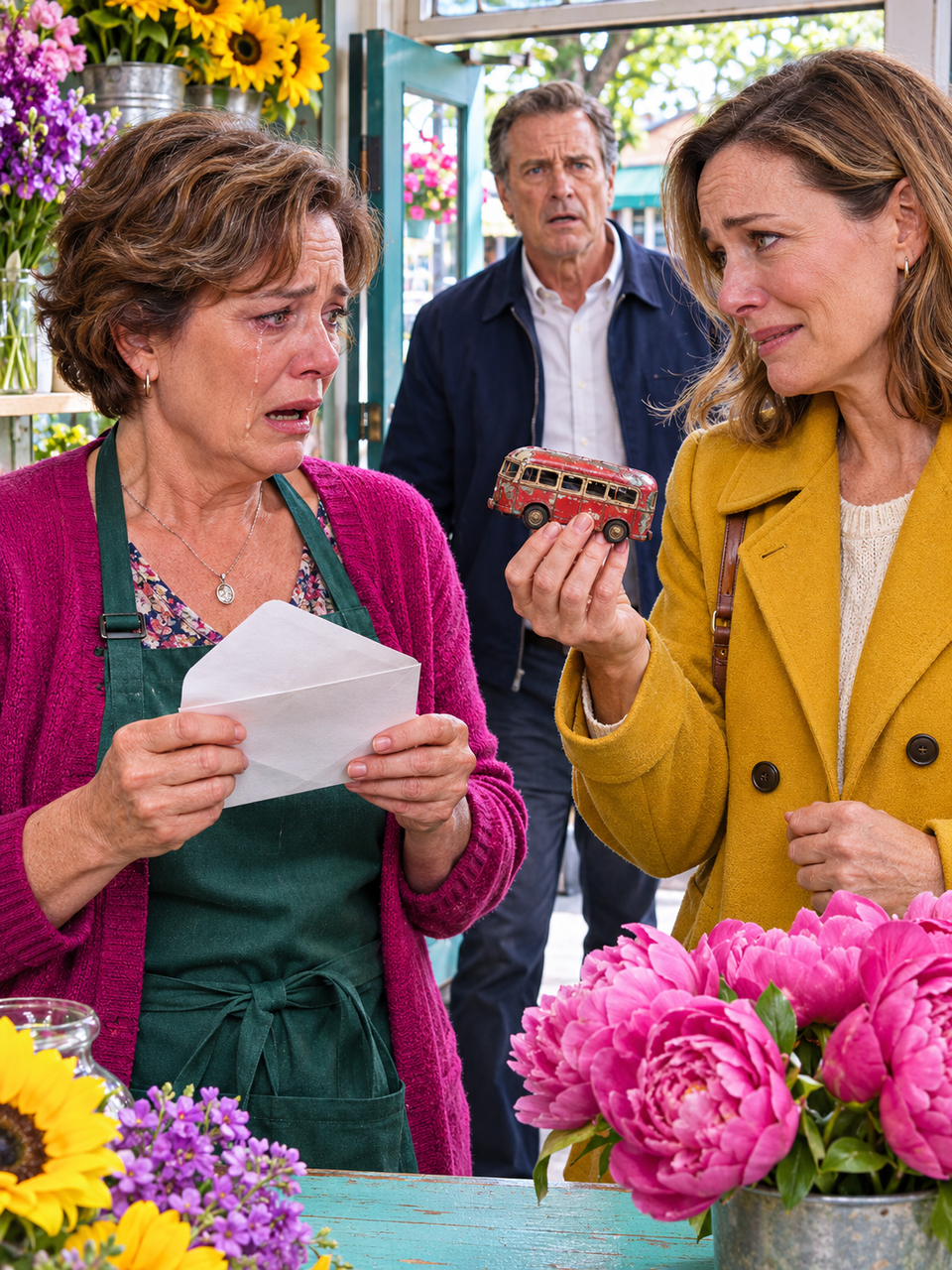
Nora stood beside the turquoise counter in a mustard coat, holding an envelope with both hands. She was forty-nine now. I knew that because I had continued counting her birthdays even while pretending I had forgotten her.
“You have no right to mention Paul.”
“That's what I expected you to say.”
She sounded tired rather than angry. It made me angrier.
“You took our mother's money. You disappeared while she was dying. Paul was the one who stayed.”
Nora looked at the wedding ring on my hand.
“I came back.”
“No.”
“The Thursday before she died.”
I remembered that Thursday. Rain against the hospital window. Mom asking whether the kitchen light had been left on. Paul bringing me coffee and telling me Nora had said she couldn't cope with sick people.
I had cried into his coat.
Now my sister wanted me to believe something else.
“Get out.”
She placed the envelope beside the roses.
“I'll go. But open that when you're ready.”
I pushed it back.
“I'm not paying for another emergency.”
Her face changed. She slipped a hand into her coat pocket and brought out a battered red toy bus.
One wheel was missing. A strip of cream paint had peeled off the roof.
I had given it to her when she was seven, after our father left. We used to sit on the back steps and pretend we could drive somewhere nobody shouted.
She rolled it an inch across the counter. The broken axle scraped the wood.
I put the scissors down.
“Why did you keep that?”
“Because you gave it to me.”
Outside, a delivery van pulled away. For a moment there was nothing between us but flowers and the little bus.
Then the shop bell rang.
Paul came in carrying the lunch he brought me every Friday. He was fifty-six, with silver at his temples and the same navy jacket he wore whenever he wanted to look dependable without looking dressed up.
He saw Nora.
His hand stopped on the door.
“Claire,” he said, “don't listen to her.”
Nora didn't turn around.
I looked from her to him.
“You haven't heard what she's said.”
“I know what she's like.”
He set the lunch bag down hard enough to knock over a ribbon spool.
“After everything she put you through?”
I had been telling myself that sentence for eighteen years. Hearing it before I had asked him a question made it sound different.
“Did she come back before Mom died?”
He pulled the door closed.
“She made a scene. You didn't need that.”
I could hear the flower cooler humming behind me.
“You told me she never came.”
“I told you she wasn't willing to behave.”
“No,” I said. “You told me she never came.”
Nora put her palm over the little bus, as if keeping it from rolling off the edge.
I opened the envelope.
Inside was a photocopy of a check. Twelve thousand dollars, drawn on my mother's account eighteen years earlier. The money Nora was supposed to have taken.
I recognized Mom's handwriting in the amount line. I recognized Paul's name where I expected to see my sister's.
On the memo line were four words.
Loan for business equipment.
Paul reached toward the paper. I moved it out of his reach.
“Where did you get this?”
“Mom sent me copies of her important papers when she started treatment,” Nora said. “I found the folder while clearing a storage unit last month.”
“She doesn't understand the arrangement,” Paul said.
I looked at the date again.
Two days after that check, he had told me Nora emptied Mom's savings and left town.
“Then explain the arrangement.”
He rubbed the back of his neck.
Nora finally turned toward him.
“And explain why you met me outside the hospital and said my sister would call security if I tried to see our mother.”
I waited for him to deny it.
Instead, my husband asked me to turn the shop sign to CLOSED.