He Called Me Poor Until The Auction Began
Part 1 - The Woman in the Borrowed Coat
“Careful with the champagne, Vivian. You can't afford to replace the carpet.”
My ex-husband said it loudly enough for the people beside the auction display to laugh.
I looked down at the glass in my hand. I hadn't taken a sip.
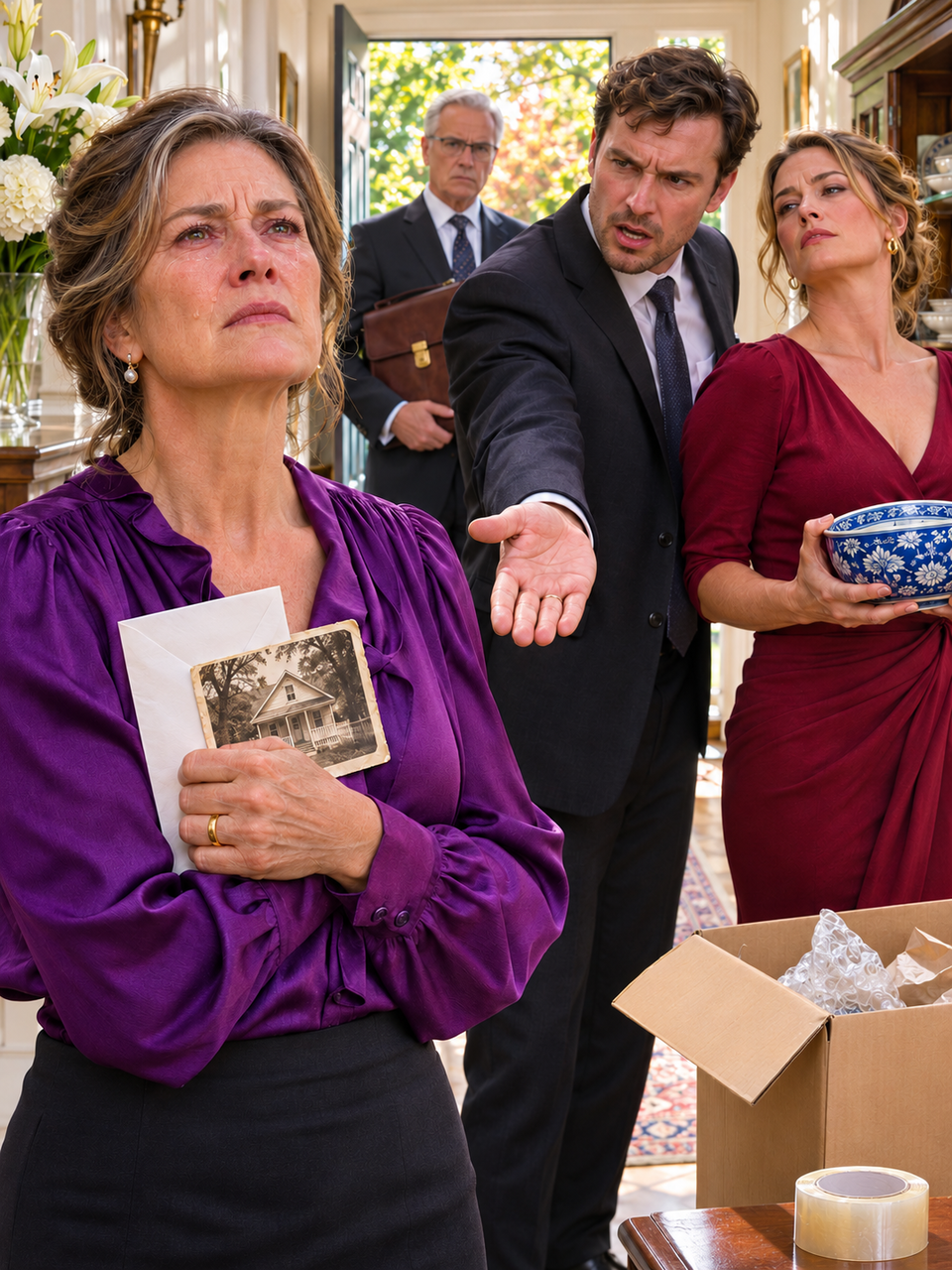
Charles stood with his new wife, a woman in silver satin who looked at my coat before looking at my face.
The coat belonged to my neighbor. Mine was perfectly serviceable, but tonight I had wanted to feel less like a woman who spent her days sanding old furniture in a garage.
At fifty-seven, I apparently still believed clothing could protect me from people determined to be unkind.
“I was invited,” I said.
“By whom?”
“The organizers.”
His wife smiled.
“That's lovely. They try to include the community.”
We were standing in the museum's winter garden, surrounded by flowers and people who spoke about art as though ownership were the same thing as understanding.
Charles had always been good at belonging in rooms. I had always been good at making the things displayed in them.
Before our divorce, I restored furniture for his design business. Afterward, he described me as someone who had never developed a real career.
I had spent the next four years developing one without him.
Across the room, beneath a soft spotlight, stood the cabinet I had come to see.
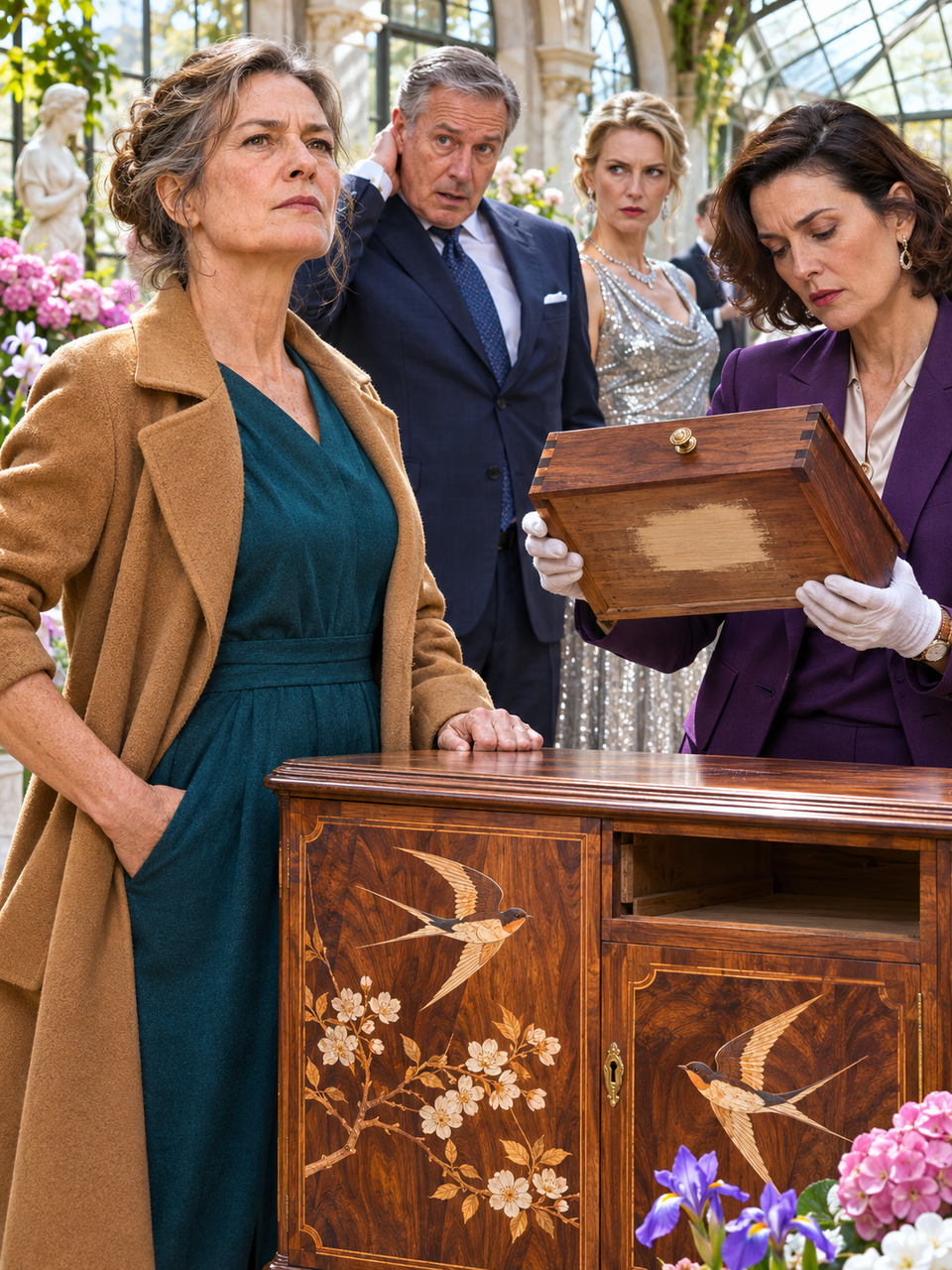
Walnut. Hand-cut marquetry. A narrow band of swallows along the doors.
My swallows.
I knew every piece of that pattern because I had designed it at our kitchen table twenty-three years earlier, while our daughter slept in a basket beside my chair.
The auction card called it a rare work by Charles Harcourt.
I read the name twice.
He followed my gaze.
“Beautiful, isn't it?”
“You donated it.”
“For the children's hospice. It should do well.”
I looked at him.
“You put your name on it.”
“It came from my studio.”
“Our garage.”
His smile tightened.
“Don't be tedious.”
I had signed the piece where I signed all my work: beneath the left drawer, in pencil, beside the date. Charles knew that. He had once joked that nobody would look under furniture unless they were searching for dust.
I crossed the room and asked a volunteer to call the specialist overseeing the sale.
Charles followed me.
“What are you doing?”
“Correcting the catalog.”
“This is a charity event.”
“Then it deserves accurate information.”
The specialist, a woman named Dr. Avery, listened without interrupting. I explained that I made the cabinet and could show her the working drawings, photographs, and signature.
Charles gave a short laugh.
“My former wife helped with a few details. She's confused about authorship.”
I took my phone from my bag and opened the archive I had photographed before leaving the marriage. Page after page of drawings appeared, including the swallow pattern with my handwritten measurements.
Dr. Avery looked from the images to the cabinet.
“May we inspect the drawer?”
Charles's face changed.
“The fittings are delicate.”
“I restore pieces for a living,” she said.
A porter helped move the cabinet away from the wall. I watched her carefully remove the drawer.
The underside had been sanded.
Freshly.
There was no signature.
For a moment, I couldn't hear the voices around me.
Charles folded his arms.
“As I said.”
Dr. Avery ran her hand near the pale patch without touching it.
I looked at the wood, then at the little swallow nearest the hinge.
When I made the cabinet, I had hidden something else inside it. A tiny mistake I turned into a private joke for our daughter.
Charles had never noticed.
“Open the right-hand door,” I said.